West Glacier Fly Fishing Guide: What to Expect on Your First Trip
Most people who show up in West Glacier for the first time are there for Glacier National Park. The fishing is something they added to the itinerary: maybe because someone mentioned it, because they saw a photo, or maybe they’ve always wanted to try fly fishing and figured this was the place to do it. That’s exactly the kind of person this area is built for.
The waters around West Glacier are good for beginners and seasoned anglers alike. This is a non-technical fishery where the fish are willing, and the learning curve can be shorter compared to other rivers. Here are some tips on what you can expect on your first West Glacier fly fishing trip, and everything you need to know before you go.
What Makes West Glacier Fly Fishing Different (And Better for First Trips)
Wild Fish That Actually Want to Eat
The Westslope cutthroat trout is the native species in these waters, and its behavior is one of the main reasons this area works so well for beginners. Compared to brown trout or rainbow trout, cutthroat are less hesitant. They do things without a lot of second-guessing. They’re not as educated, not as suspicious, and not as likely to refuse a fly that wasn’t presented perfectly, which makes it very forgiving for beginners.
Part of that comes down to evolutionary pressure. Cutthroat historically had a much larger range, but that range has contracted significantly over time. The populations that remain tend to live in less pressured water, and less pressure means the fish haven’t been trained to be wary. Less pressure also means the fish are hungrier, which is great news for anglers visiting the area.
There’s another layer to it. The headwaters in this area were scoured by glaciers, which means the water is extraordinarily clear and beautiful (you can see 30 feet down in some stretches), but it also means the water carries less nutrient load. Fewer nutrients mean less food in the system, and fish that have a shorter growing season make the most of every opportunity they get. They feed aggressively, and they key heavily on terrestrial food sources, meaning things that fall or blow into the river from the surrounding landscape: ants, moths, grasshoppers, the occasional unlucky moth.
That’s important for beginners because it means these fish are programmed to eat off the surface of the water. The fish comes up, opens its mouth, and the whole thing is right in front of you. That’s a different experience from fishing subsurface.
Non-Technical Waters
On a technical tailwater like the Missouri River, if your presentation isn’t close to perfect, you’re often not getting a bite. The fish are educated, and it becomes important to learn what guides call a “dead drift” (presenting a fly so it floats naturally, without drag from the line) needs to be more exact.
The Flathead River gives you more margin to work with. Cutthroat on these freestone rivers will often bite even if there are mistakes in presentation. That doesn’t mean you shouldn’t try to improve your drift, but it does mean that a missed cast isn’t the end of the world. This is a great river to learn more about fly fishing with very low stakes.
Honest Numbers
When it comes to quality, you’re not going to catch 40 fish in a given day. That’s not the nature of this fishery. The Flathead system is a migratory trout fishery, which is unusual for Montana and more common in coastal ecosystems. Fish move, spread out across hundreds of miles of river, and aren’t stacked up in one place the way fish are on famous tailwaters. What you get instead is a day where the fish you catch feel earned, and the scenery you’re surrounded by is Montana’s finest.
We try to define a successful day by coming off the water having learned something, having experienced the beauty of nature, and wanting to come back!
The Best First-Trip Waters Near West Glacier
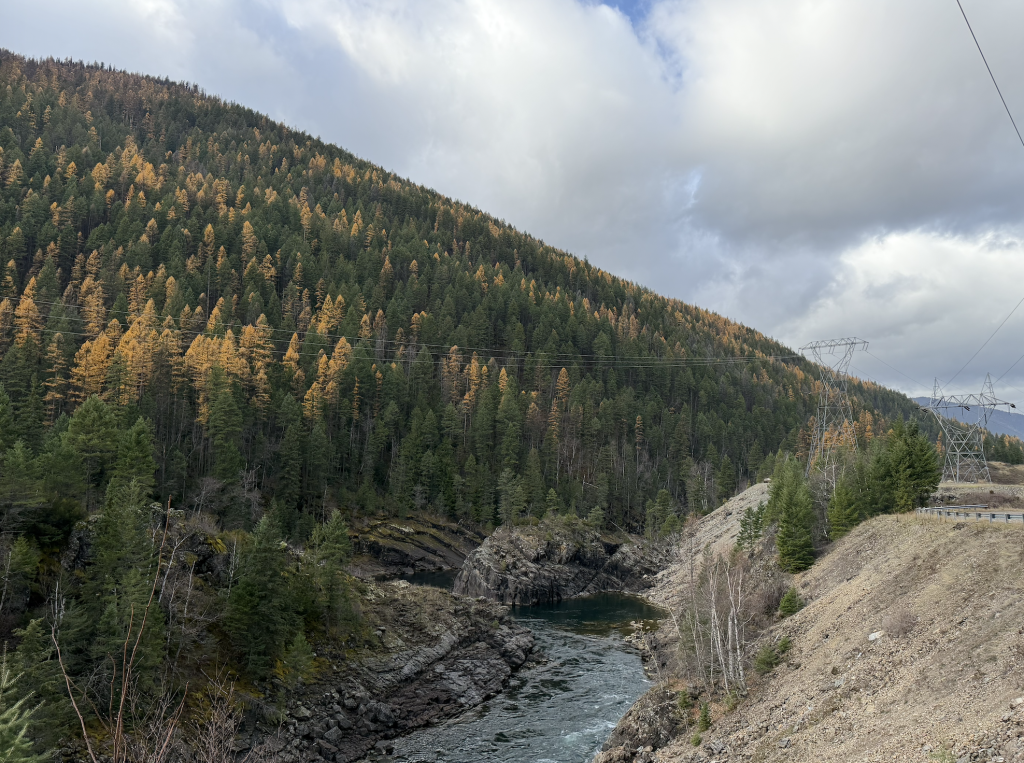
Middle Fork of the Flathead River
The Middle Fork comes out of the Great Bear Wilderness Complex and is a great fishery for those who have a little bit of fishing experience. It offers consistent dry fly action when conditions are right, has good structure that guides can read and explain to beginners, and gives you a float experience rather than a wade-fishing day, meaning you’re covering water in a drift boat or raft, which removes a lot of the physical and logistical complexity for someone who’s never done this before.
Fish behavior on the Middle Fork is about as approachable as it gets for cutthroat. The river has character without being overwhelming, and on a good summer day, the combination of surface takes, scenery, and fishable stretches makes it a natural fit for someone who wants to walk away with a real sense of what fly fishing in Montana is.
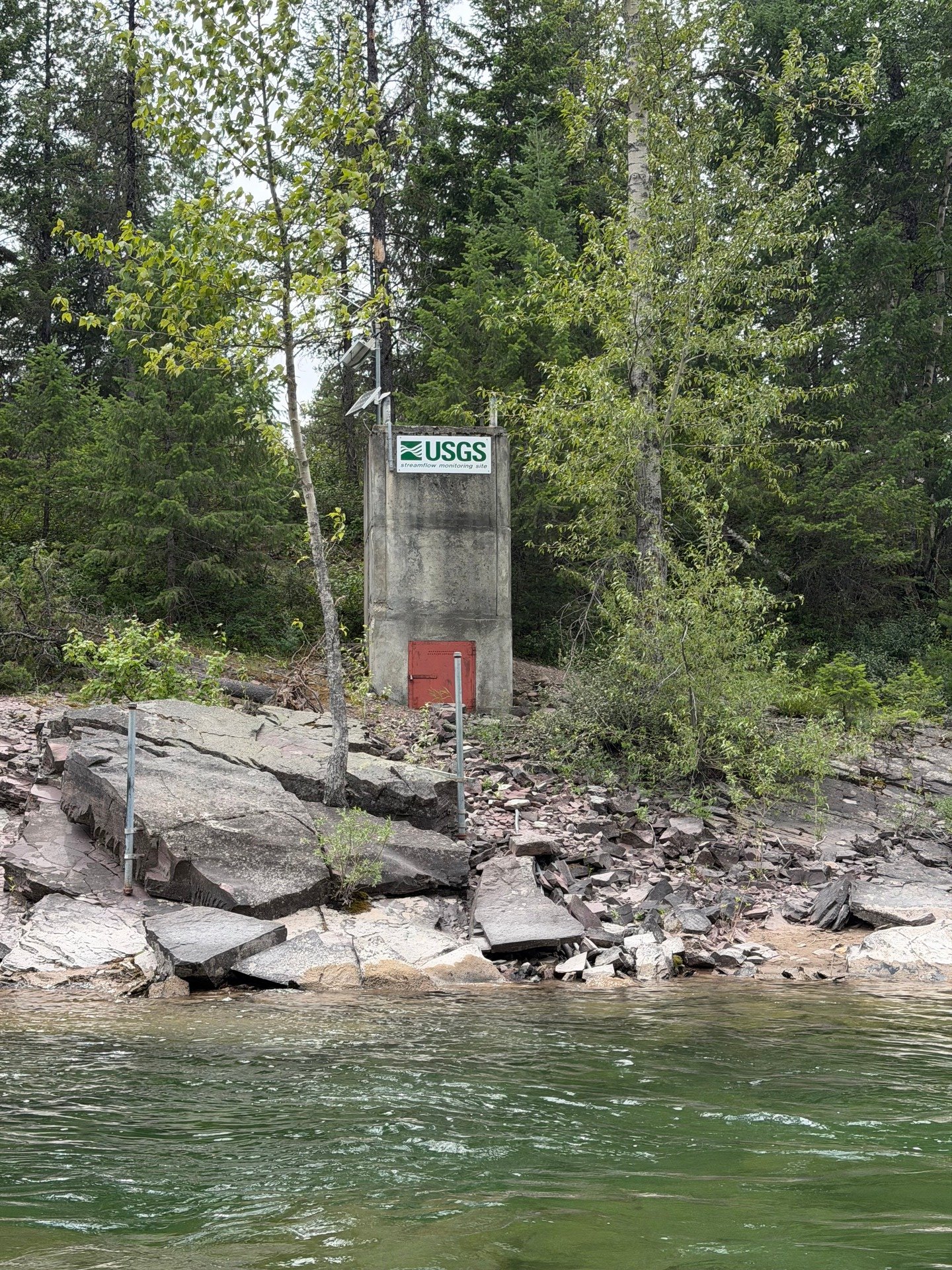
The Middle Fork is best from mid-July through August as summer flows settle. Conditions shift year to year, so checking water levels with USGS.
North Fork of the Flathead River
The North Fork drains out of British Columbia along the western edge of Glacier National Park, and it has a feel that’s distinctly different from the Middle Fork. It has a more remote and wide open feel. We tend to send DIY anglers who ask for recommendations toward the North Fork because access is solid (there’s a road running alongside much of it with several boat ramps) and it’s a forgiving fishery with good numbers.
For a guided first trip, the North Fork is a strong option if solitude and scenery matter to you as much as the fishing. It’s the “quantity over quality” fishery in the area, so it may be a day where you end up with more fish in the net. Wind and logistics can be factors, and it’s a bigger piece of water in some sections, but with a guide managing the boat, those concerns mostly disappear.
Main Stem of the Flathead River
The main stem doesn’t get mentioned much in regards to beginner fly fishing. Early in the summer float season, the main stem can be excellent. It’s a large river, which can be intimidating if you’re standing on the bank looking at it, but from a drift boat it opens up differently. Guides will work the braids, the side channels that cut the main flow up to 25,000 CFS down to something much more manageable, where fish hold because they’re not burning energy fighting the main current.
Local Lakes
When the rivers are blown out during spring runoff, which typically happens sometime in May and can last several weeks, lakes near Glacier are the backup plan that save a lot of trips. Still water fly fishing is a different skill set, but in some ways it’s still a great introduction to the sport: less going on at once, more time to focus on technique. Our guides are flexible enough to pivot to lakes when river conditions require it, which is exactly what you want from a guide operation in a weather-dependent region.
Choosing the Right Water for Your First Trip
If you want the a smooth introduction to fly fishing in this area, the main stem or the north fork is where most first-timers will thrive. With the combination of good fish, readable structure, and float-trip logistics makes it the lowest-friction day on the water.
If solitude and scenery are your priority and you don’t mind a slightly different experience, the North Fork delivers that in a unique way.
If you are really short on time, and the water on the mainstem isn’t too high, a half-day trip can be well worth the visit. We also run half-day trips out on the nearby lakes, which can also be a neat experience.
When to Go Fly Fishing in West Glacier
Spring (March Through Early May)
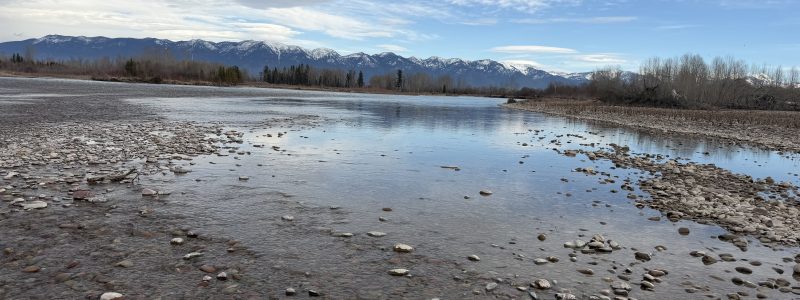
The Flathead system is migratory. When river temperatures drop in the fall, a large majority of fish flush down into Flathead Lake to winter. In early spring, historically, the second or third week of March, they start coming back into the river. That early-season window is when you can catch some of the best specimens in the system, since the fish are funneling through predictable water before they spread out across hundreds of miles of river.
This is not a numbers game season, but the quality can be well worth it. We will start to notice fish trickle in around this time of year. You can expect to experience cold mornings, snow-capped peaks, and cold clear water. Waders are necessary this time of year.
Runoff (Mid-May to Late June)
When snowmelt hits the system, flow goes up, visibility drops, and floating the main rivers can become difficult or dangerous. This period can last several weeks, so it’s good to call a local outfitter and get their perspective on water levels and conditions.
When conditions change, that is the perfect time to explore other options. We fish the Thompson river as well as the Missouri River when water levels are high in the Flathead. Lakes near Glacier can also fish well during the runoff season. Managing expectations is part of what good guides do, and a good guide will have options no matter what the river is doing.
Summer (July Through August)
Once flows on the main stem drop below 25,000 CFS with at least two feet of visibility, the summer float season opens. Historically, that lines up around the Fourth of July. From then through August, the mainstream and the fork of the Flathead River come into prime condition through mid-to-late July, and this is the window most first-timers should be targeting.
Fall (September Through Late October)
Fall is an underrated window that doesn’t get the attention it deserves. Water temperatures start dropping, fish begin migrating back toward the lake, and the fish that are in the system tend to be aggressive and focused on feeding hard before winter. There are fewer people on the water, and you start to see the leaves changing color which is always worth the trip.
What a First Day Actually Looks Like
The First Hour
The first hour on the water is about learning to cast well enough to put the fly somewhere useful, understanding what a dead drift looks like, and starting to read the river. Of course as a beginner you may make mistakes, but we try to focus on education so that every step of the way you come away with more knowledge and understanding about fly fishing and the surrounding ecosystem.
At Wild Montana Anglers, our guides are teachers first. We don’t vet clients based on skill level or take only the experienced anglers. We want to take people out on the water who want to be there, no matter the skill level or previous experience.
The First Fish
On some fisheries, especially subsurface fishing, you’re watching a strike indicator and trying to detect something subtle happening underwater. Here, you get to watch the fish eat. The cutthroat comes up, tips its nose out of the water, and takes the fly right off the surface.
That visual element is one of the reasons dry fly fishing on this water works well for beginners. You know when you have a bite and you know when you missed one. The feedback is immediate, and that makes it easier to learn.
How the Day Flows
A guided float on the Flathead system typically covers several miles of river over the course of a full day. You’re moving through the water in a drift boat or raft, which means your guide is on the oars while you’re focused on fishing. That setup lets you cover water efficiently and get your flies in front of a lot of different fish rather than working one spot for hours.
Your guide will watch your cast, your drift, and your hook set and make small suggestions as you go. They will be there for the moments when you need help fighting the fish and need some backup. By the time you’re a few hours in, most beginners have a functional cast and a basic read on where the fish are holding. The learning curve on this water is genuinely quick.
Common First-Trip Mistakes
Trying to Learn Everything at Once
Fly fishing has layers, and beginners sometimes try to absorb all of them in a single morning. Casting mechanics, reading water, managing line, identifying bugs, working a drift: you don’t need all of it on day one. Focus on one thing at a time and let the rest come.
Focusing on Distance, Not Drift
Beginners often want to cast far because casting far seems like it means you’re doing something right. On cutthroat water, the fish in the first 30 feet of the boat are often the best targets. A short cast with a clean drift may consistently outperform a long cast with a bad one.
Treating It Like a Numbers Game
If you spend the day counting, you’ll miss what’s actually happening around you. The anglers who stay curious and observant catch more fish than those who are frustrated about not catching more fish.
Do You Need a Guide for Your First Trip?
What a Guide Actually Changes
Access is the obvious one. Guides know which water is fishing well right now, which sections are too blown out to fish, and which sections on the main stem are worth the detour. That local knowledge takes years to build. Beyond access, a guide walks through your learning curve with you in a way that’s hard to replicate on your own. You get real-time feedback on your cast, your drift, and your hook set.
There’s also safety and logistics. Floating a big river in a drift boat isn’t complicated with a guide running the oars, but it’s a different proposition for someone who’s never done it.
When You Can Go Without One
If you’re a returning angler with some experience, or you’re comfortable wading and happy to explore on foot, the North Fork has good public access. For total beginners who want to maximize their chances of catching fish and learning skills in a single day, a guide is probably worth it. For experienced anglers who want to explore on their own terms, there’s plenty of water to find on your own. Learn more about where to go with our Flathead River Access Map.
The Learning Curve Tradeoff
Think of it this way: a day with a guide is essentially a fly fishing masterclass. You leave knowing things that have taken experienced anglers years on the water to discover. Whether that’s worth the cost depends on what you’re after. If your goal is to catch fish, learn the sport, and come away feeling like you understand what you were doing, guided is the way to go.
Gear You Actually Need (And What You Don’t)
The Simple Setup
A rod weight from 4 to 6 will be suitable for what you’re going to catch on the river.. A 5-weight is the most versatile option, good for a single dry fly, manageable in wind, and capable of handling the range of rigs guides use. A 4-weight is great for lighter presentations on calm days. A 6-weight fits when the wind is up or you’re throwing heavier rigs. Leaders run 3X or 4X, which are technical measurements, but the short version is that this water doesn’t require the ultra-fine, ultra-precise terminal tackle that technical tailwaters demand.
What to Wear
Layering is the whole game in Montana. Mark has seen snow every month of the year, and mornings can be cold even in July. The standard kit: base layers, quick-dry pants, a sun hoodie, a puffy jacket, sunglasses, a hat. A rain layer is smart. Waders are useful in the shoulder seasons, spring and fall, but most summer float trips don’t require them because you’re in a boat.
Bear spray is worth mentioning if you’re planning any DIY fishing in this area. The northern continental divide ecosystem has the highest concentration of grizzly bears outside of Alaska. On guided WMA trips, guests are asked not to bring bear spray or firearms into the boat, and there’s a reason for that, and Mark tells it better than it can be summarized here.
Presentation Beats Gear
This is worth repeating: a skilled presentation with a basic fly consistently outperforms a perfect fly thrown badly. Don’t spend the week before your trip buying gear. Spend the morning of your trip working on your technique.
Respecting the Resource: The Unspoken Rule of West Glacier Fly Fishing
Why Native Cutthroat Matter
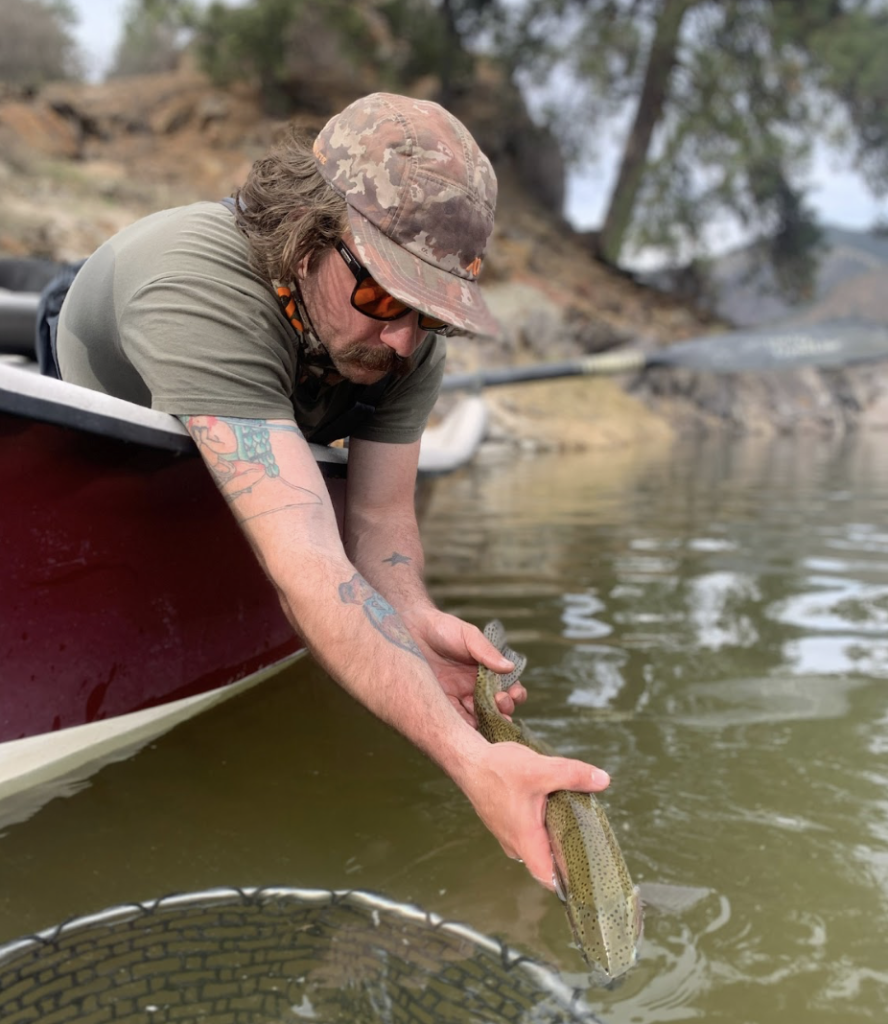
Westslope cutthroat are native to this drainage and are ecologically distinct from the trout species introduced to other systems throughout the West. Their range has contracted significantly from where it historically was, which makes the populations that exist here worth protecting. On every trip we utilize “Keep Em Wet” handling standards that minimize stress on fish.
Simple Habits That Make a Difference
Keep fish in the water during release. Wet your hands before touching them. Pay attention to water temperature. Once it climbs into the mid-to-high 60s in August, cutthroat in certain drainages are under stress, and fishing through warm afternoon hours becomes a question of whether it’s responsible to do so.
For DIY anglers, pack it in and pack it out. Don’t cut paths to the river through vegetation. Park where you’re supposed to park. These rivers see enough pressure without people adding to it carelessly. We pride ourselves on respecting the nature, and encourage everyone to do the same whether on a guided trip or not.
FAQ: West Glacier Fly Fishing for First-Time Anglers
Is West Glacier good for beginner fly fishing?
It’s genuinely one of the better places in Montana to start. The native cutthroat are a great species for beginners to target, the rivers are mostly non-technical, and fishing from a drift boat or raft removes a lot of the wading and logistics complexity that can overwhelm beginners. The visual nature of dry fly fishing here, watching fish rise to eat, makes the experience accessible and memorable even for people who’ve never held a fly rod.
What fish can I expect to catch near West Glacier?
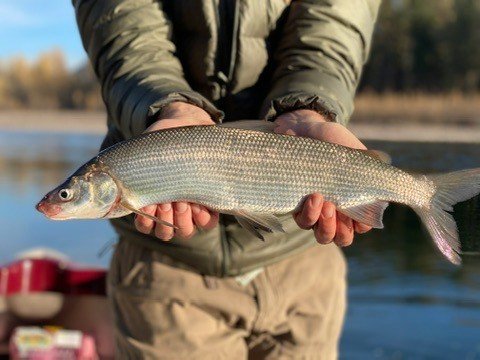
Westslope cutthroat trout are the primary target in the Flathead system. They’re native to this drainage and make up the bulk of what guides are targeting on float trips around Glacier. Depending on the water and time of year, you may also encounter bull trout, mountain whitefish, and a few other species.
Do I need a fishing license near Glacier National Park?
Yes. Montana requires a fishing license for all anglers 12 and older. Fishing inside Glacier National Park has its own set of regulations distinct from general Montana state rules. If you’re booking a guided trip, your guide can walk you through what’s required. For DIY fishing, please always check regulations through Montana Fish, Wildlife & Parks for current license requirements and Glacier National Park’s website for any special park regulations before you go.
When is the best month to fly fish in West Glacier?
July and August are the most consistent windows for first-timers. The rivers have settled from spring runoff by early July, cutthroat are active and feeding on the surface, and the days are long enough to make a full float comfortable. Early fall, September into October, is excellent for those who don’t mind slightly more variable conditions and want to trade crowds for aggressive fish and fall colors.
Can you fly fish without a guide in Montana?
Absolutely. Montana has extensive public land access, and the North Forks of the Flathead in particular is accessible along much of its length. For a first-timer who has some outdoor experience and is comfortable on their own, it’s very fishable. The tradeoff is the learning curve. Without someone in the boat correcting your drift in real time, the skill development is slower. Both approaches are worth doing at different points in your fishing life.
What flies work best on the Flathead River?
On the terrestrial side: hoppers, ants (flying ants especially), and various moth patterns are reliable throughout the summer. For aquatic insects, stoneflies, mayflies, and caddis all produce well, both as dry flies and nymphs. The honest answer is that this isn’t a technical fishery where fly selection is the make-or-break variable. Presentation matters more than pattern. A hopper or a basic attractor dry fly in the right size, drifted well, will get eats on most summer days.
Start Simple, Pay Attention, and Let the River Teach You
West Glacier doesn’t require you to show up as an experienced angler. What it does reward is curiosity. The water, the fish, the ecosystem underneath it all, there’s a lot to pay attention to out there, and the more you tune in to what’s happening around you, the better the day gets, regardless of how many fish end up in the net.
If you have questions about timing, water conditions, or what to expect on a first trip, reach out to us and learn more about Wild Montana Anglers. We’re happy to talk through it before you book anything.