
Ethical Pondering and Spring Fishing in the Flathead Valley

A Guides Take on Technical and Ethical Questions
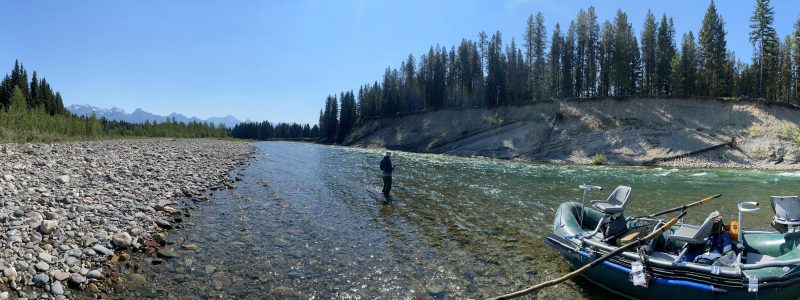
Recently, Flathead Trout Unlimited published a blog post titled “Shhhh… It’s a Secret”, which highlights a seminar by me, Mark Fuller, dedicated to technical aspect of fishing in the Flathead River system. This seminar focused on the unique set of circumstances we as anglers in this area need to be aware of to find success with our springtime fishery. The Flathead River near Glacier National Park is unlike any other drainage in the state of Montana and requires more of a strategic approach to having a successful outing before the days of summer arrive.
As a way to inject humor into the seminar’s synopsis the author made references to the idea that spring fishing on the Flathead is a secret that only a few know about. I took no offense to the title or text and am honored to of been asked to share some of my knowledge on the drainage to a group of like minded conservation folks that reflect similar values to my own. However, it did make me think about my impact on the fishery and I couldn’t help but think about and the delicate balance between sharing knowledge and protecting fisheries. As fishing guides, we walk a fine line between introducing newcomers to the sport and preserving the fragile ecosystems that make fishing so rewarding.
There’s something magical about stumbling upon a pristine, untouched fishing spot. A place where the water runs clear, the fish are plentiful, and the only sounds are the rustling trees and the rhythmic cast of your line. But should we keep these places secret, or share them with others who share our passion for fishing?
Deep thought s for a fishing guide eh? More on that later.
The Seminar’s Take Aways: Conservation, and Technique
The seminar, hosted by Flathead TU, focused on the technical skills needed to fish ethically and effectively in the Flathead region during the spring. Some of the key takeaways included:
Conservation through best practices – Keeping certain spots vague and following best fishing techniques could help maintain fish populations and water quality.
Exploration over exploitation– Instead of relying on social media to find fishing spots, anglers can embrace the thrill of discovering places on their own.
Spring trout behavior – Understanding our trout’s migrational movements and how water temperatures, insect hatches, and runoff conditions impact trout feeding habits and movement during late winter and spring.
–Effective techniques for spring fishing – The seminar covered strategies such as nymphing in colder water, using streamers outside the traditional methods, and matching the hatch to increase success rates. It also talked about the subtle and not so subtle differences in water types that are more effective when fishing late winter and spring.
Should We Share or Stay Silent?
The debate over whether to share secret spots and techniques is nothing new. On one hand, introducing others to fishing can help grow appreciation for conservation. On the other, widespread knowledge of a location can lead to environmental degradation, littering, and disgruntled anglers. Many seasoned anglers adopt an unspoken rule: share the sport, but not the spot. Which side of the coin is right?
In this presentation, No specific spots were named. Undiscript aerial photos were used to explain certain types of water anglers should look for when out exploring the fishery on their own. This method helps the angler in furthering the process of reading water through the powers of deduction. If the angler finds success, they can then use that experience to seek similar water in other sections and ultimately find the confidence to explore other drainages.
The Joy of Discovery
Do you remember the first time you found a fishing spot that blew your mind in how good it was? I do. It involved looking at a blue line on a map that sparked a sense of wonder. The hike in was terrible. My mind was full of doubt and trepedation. Once I got to the first spot I could make it down to the water I found solitude, willing trout, and a sense of pride knowing I found this place by my own wits. That feeling is something every angler should experience. But had I shared the location too widely, it wouldn’t have remained the same for long.
Instead of broadcasting locations, I’ve found more joy in mentoring new anglers on how to find their own special places. Teaching someone the art of reading a river, understanding fish behavior, and practicing ethical fish handling practices is far more rewarding than handing them a pin on a map.
Does Protecting What You Love Equal Gate Keeping?
There will no doubt be folks that will interpret the previous words as an outfitter that makes money off of a public resource talking through both sides of his mouth. In some ways those folks have valid concerns. I feel a small sense of hypocracy in outftting and advocating for more discretion in the way that we as anglers conduct ourselves to the wider world. However, I believe there can be a balance between teaching folks to become more informed about the fisheries we love without putting that fishery in the spotlight. That includes putting the resource in front of personal ambitions and that is not an easy task. I am working on it everyday. Its a journey. But it is a journey worth exploring in my book.
Whether or not you believe in sharing fishing “beta” (information) about a particular drainage to an audience is a personal choice. But one can argue, we all have a responsibility to protect and preserve the places we cherish. If you’re interested in this conversation, I highly recommend checking out future blog articles on this website and continuing the conversation with friends and loved ones. It is not an easy conversation but it is well worth the discussion.
What do you think? Drop your thoughts in the comments below!

